(Lions, and tigers, and bears…oh my!-Dorothy Wizard of Oz)
There are, of course, many differences between Europe and America. Obviously. But one notable difference is the very different feeling you get when you walk along the streets of Rome, Budapest, or Prague and when you walk along the streets of New York, Philadelphia, or D.C.
The sites—monuments, landmarks, and museums—in Europe feel different. This could be an American phenomenon. An American-in-Europe phenomenon.
For me, Ms. Wanderlust-So-Extra, the places in Europe feel inviting. They feel a part of the street, a part of the culture, and very natural, even when you don’t speak the language or understand the historical or cultural significance. These places feel more subtle than the attractions and the revered, untouchable tributes we have in the US.
The places in Europe, in my experience, invite you to come in, to smell the age, to listen to the stories, and the experience inspires you to go home and research them. These artifacts are presented in a way that represents a history of a people, of a culture, and of a time that no longer exists, but are meant to mark the existence–and your existence.
I think the recent controversy over statues in America has encouraged me to think more about why these places and artifacts in Europe feel different to me. That reflexive answer is that I am a tourist and these aren’t representing my history–thus the fascination. But, that’s not it. Because, when I really think about it, they ARE my history. The Duomo in Firenze, Italy is my history too.
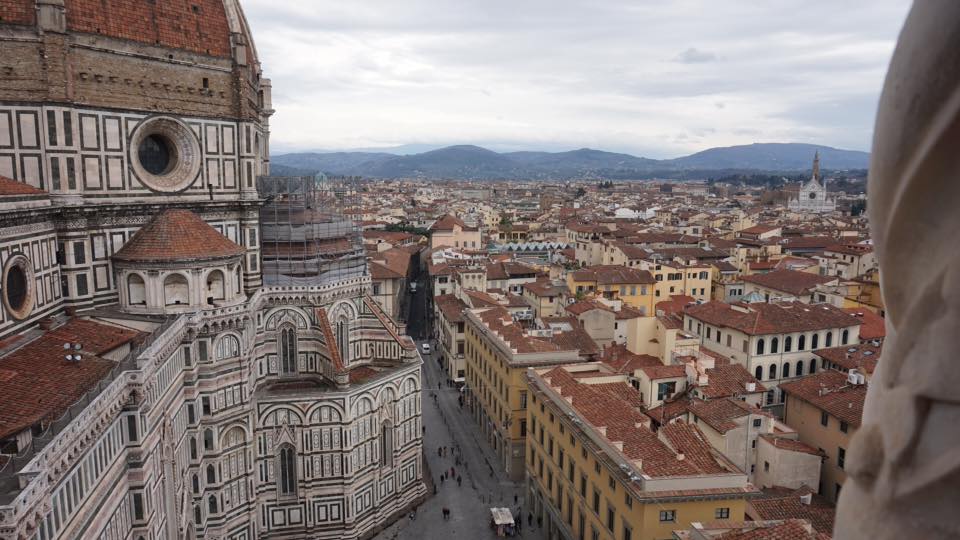
The Duomo is a story of the Medici family and their desire to honor God and to use their wealth and power to build a monument that the Florentine people could call their own. It’s the story of Brunelleschi, an architect, and engineer, who believed that the structure could exist even when no dome that large had ever been built. The Duomo is the story of the rebirth of a culture and a people after the devastating effects of the Black Death. It’s the story of human production and human creativity and human passion, and the capacity of the human spirit to believe in something based on nothing more than faith.
Those are humanistic stories. They are universal stories.

It seems, to me at least, that this humanistic connection to artifacts is more accessible in Europe because so many of them represent a collective humanistic ideal or a historical moment rather than a single person.
Oh, single-person tributes exist in Europe too. You can’t go anywhere in Tuscany without being inundated by Dante Alighieri.

Photo Credit: https://www.neh.gov/explore/the-world-dante
But Dante is revered because he wrote The Divine Comedy (and he is credited as the father of the Italian language). The Divine Comedy is a story of Dante’s journey through the three stages of the afterlife. The narrative poem’s reception, and its popularity, make Dante the man and the artifact.
The Divine Comedy wasn’t even accessible to most people because Dante chose to write in the vernacular language of the Florentine dialect. If you wanted to read it, you had to learn the language. And, the first English translation didn’t come out until 1814.
1814!!! America was already a new nation by then.
While Dante’s work contains a commentary on the 14th century political climate in Florence, people across time and across cultures have connected to the larger ideals he also presents. Dante’s journey represents his struggle to understand how our lived-life determines our afterlife. While a first mention of that particular struggle might not resonate, the lasting appeal of the text proves it does.
Christian Blauvelt points out in an article for BBC, “You may have never read a single line of The Divine Comedy, and yet you’ve been influenced by it.” Dante’s work evokes such punishing imagery of Hell that his words have the ability to generate anxiety even in the unbelievers. Blauvelt points out that the famous tagline “All hope abandon all ye who enter here” has been reused repeatedly in contemporary iconography: as the epigraph in American Psycho, a Pirates of the Caribbean ride, and in the immensely popular World of Warcraft game. While one may not believe in Hell, the warning Dante created applies to larger imaginings of “the-most-awful-place-ever” in everyone’s mind.

The same can be said of Michelangelo’s sculpture of David. When you stand before the 17-foot-tall statue and look up, it’s impossible to see anything other than the amazing expression on David’s face. He has a look of determination that is backed up by the ease in his confident stance. It’s as if his whole being is focused on succeeding. The desire and determination to accomplish something is a very, very real human story. We can all relate to the excited but anxious feeling of accomplishment. The look on David’s face and his posture reflects that human emotion. That very emotion we have all felt.
The first time I visited the sculpture, I knew that this was what the Italians call, sprezzatura.
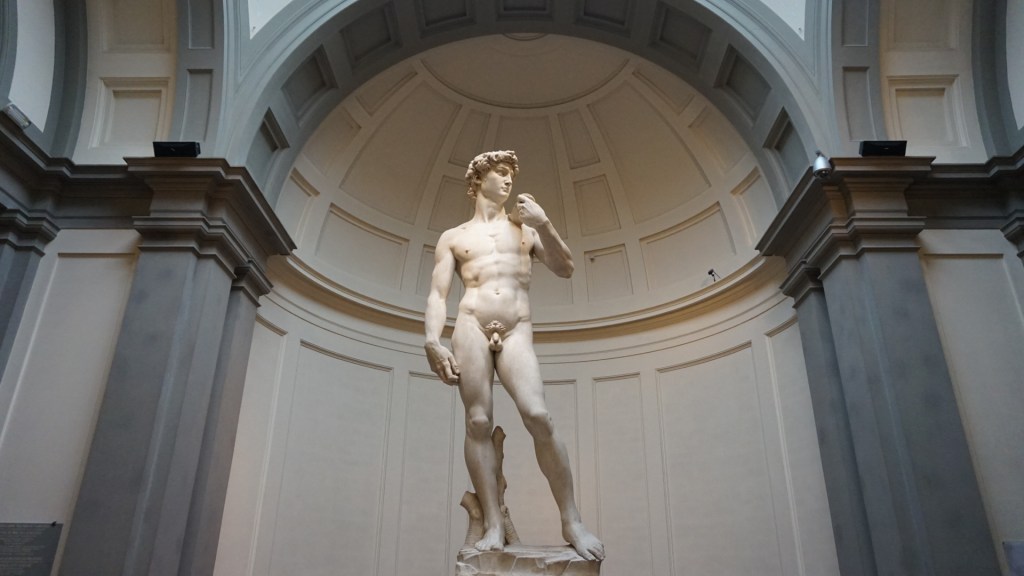
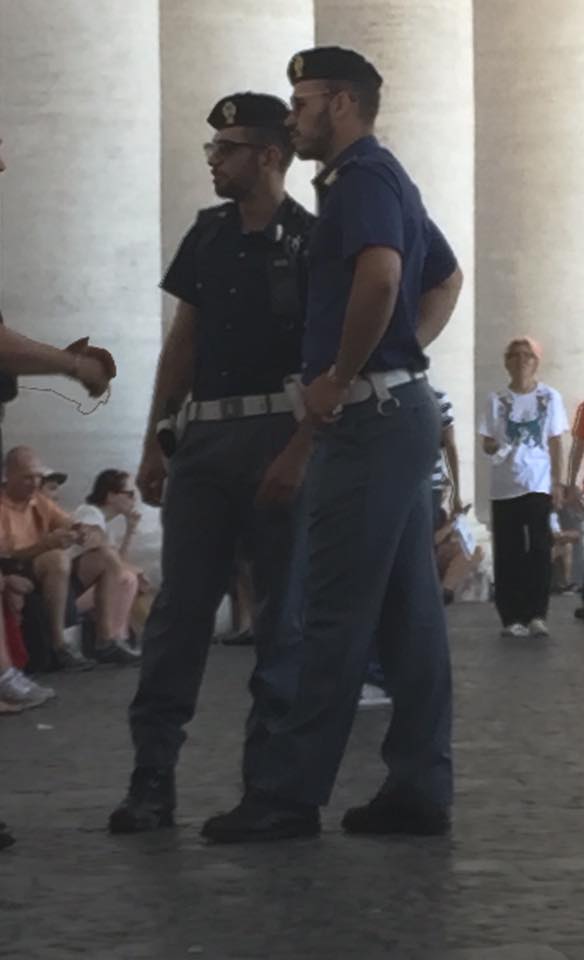
Though the sculpture was created in 1501, the term sprezzatura is defined, in 1528, by Baldassare Castiglione in Book of the Courtier as “a certain nonchalance, so as to conceal all art and make whatever one does or says appear to be without effort and almost without any thought.” (https://www.thelocal.it/20190121/italian-word-of-the-day-sprezzatura) While sprezzatura may not be something felt by everyone, as a human I can certainly appreciate the concept! And you’ll never look at the Carabinieri the same once you’ve seen David and you’ve heard the term sprezzatura.
(On the left, I don’t know where I got it (**internet wonders), but the one on the right is one my Mom and I took outside of the Vatican 2015).

Attenzione! Even for the non-reader, the unbeliever, the non-traveler, the non-Italian speaker, The Divine Comedy is a humanistic story. Michelangelo’s “David” is a humanistic story. It is YOUR story. And you can visit this history at the Accademia, at Dante’s home, and at the church he attended. At the Santa Margherita de’ Cerchi (known as Dante’s Church) you can leave a note of prayer for Beatrice (Dante’s love in real life and in the poem) to seal your love. And when you go, you will feel welcome. Dante and David, like so many other monuments, landmarks, and museums in Italy, tell your story—the history of being human.
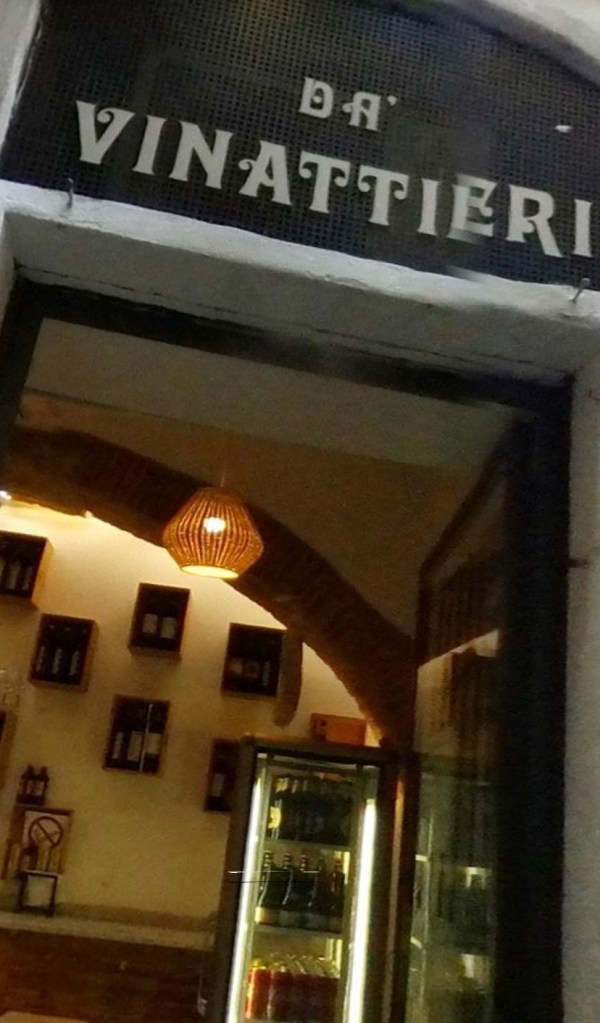
P.S. stop next door to the church at one of the friendliest, places for a cocolli and a 2 euro glass of wine.
Article by Christian Blauvelt:
 Wanderlust and Cosmos